The experience
What actually happens in the room
No talking circle, no worksheet, no critique at the end. Music, materials, and enough room to find out what you do when nobody is directing you.
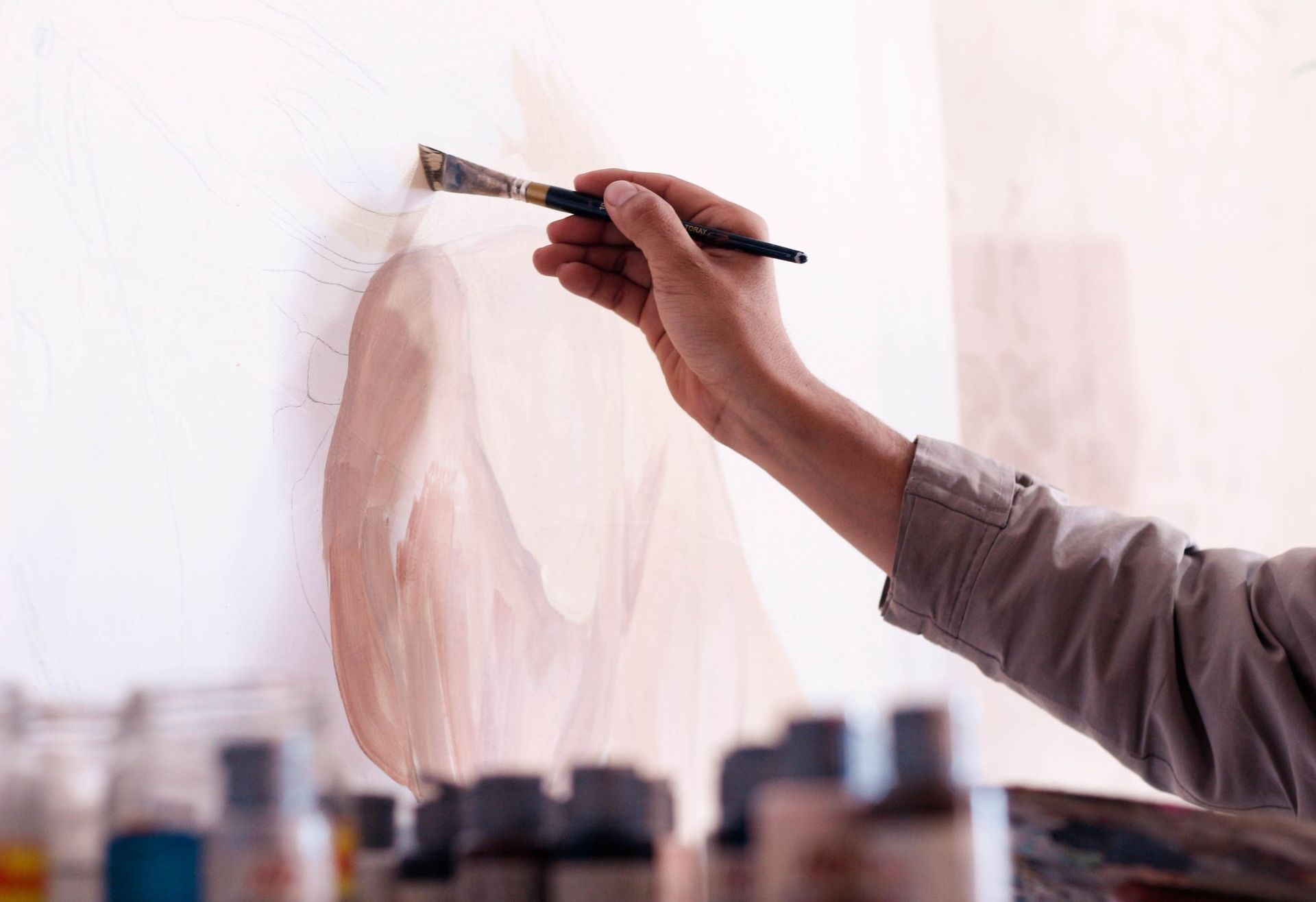
In the room
Very little guidance
You will not be told what to paint or how to hold anything. The process unfolds however it unfolds for you, and that is the entire point of it.
Everything is music backed. The music is there to give you something to move with, so the part of your head that wants to plan has something else to do.
What you will work in
The mediums
- Fluid art
- Thin paint poured onto canvas and moved by tilting it. You are steering, not drawing. It is where almost everybody starts.
- Sculpting and casting
- Hands in material. Slower, more physical, and it asks something different of you than paint does.
- Writing
- Fiction more often than not, because fiction lets people say things they cannot say straight, and find angles they had not seen.
Her own work
One of hers
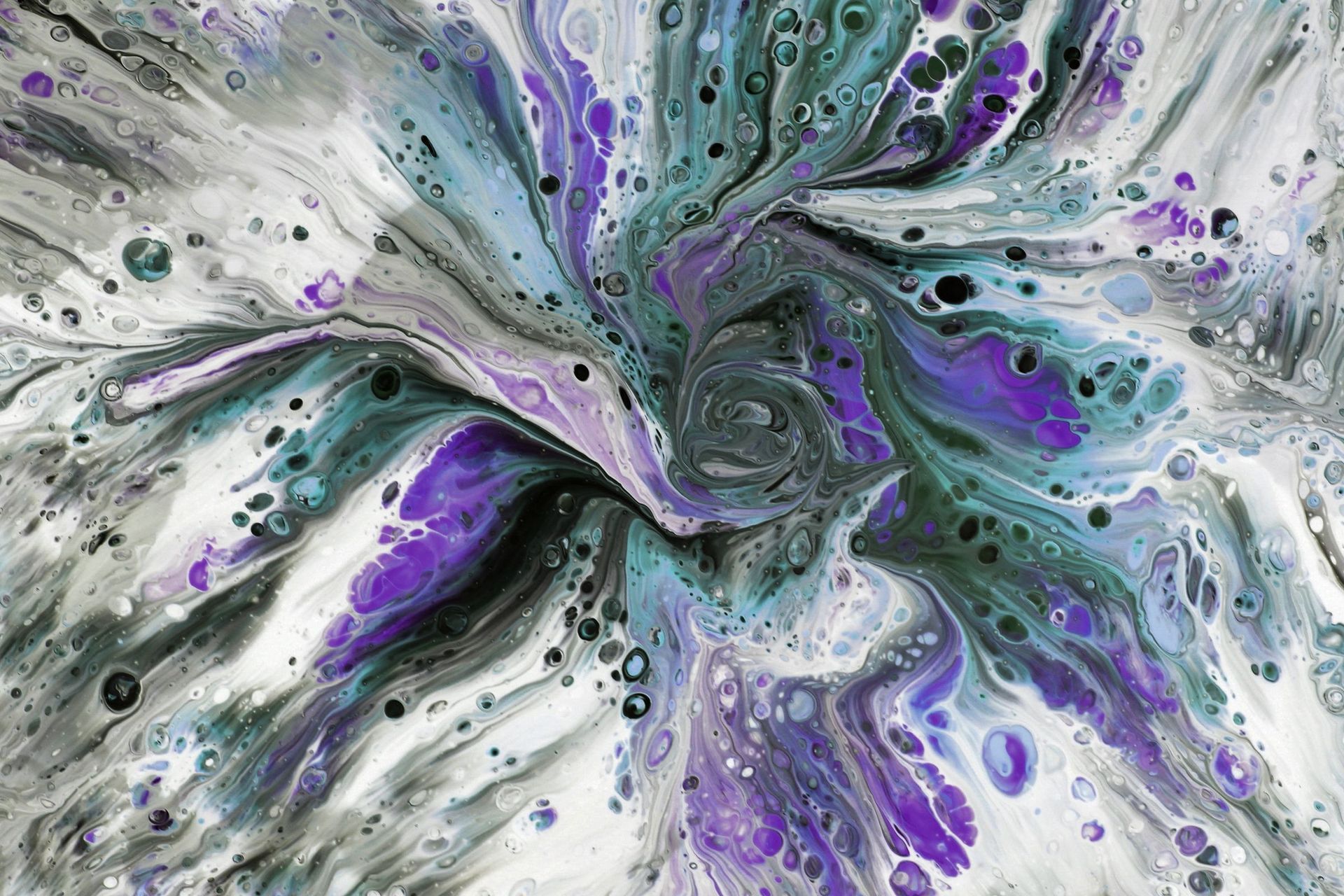
Jessica poured this one. It is here because it is the honest answer to what a canvas looks like when nobody has told you what to make.
Fluid art under blacklight, which is where the pigments she works with stop behaving like paint. Nothing in the room is aiming at this — it is just what the process leaves behind.
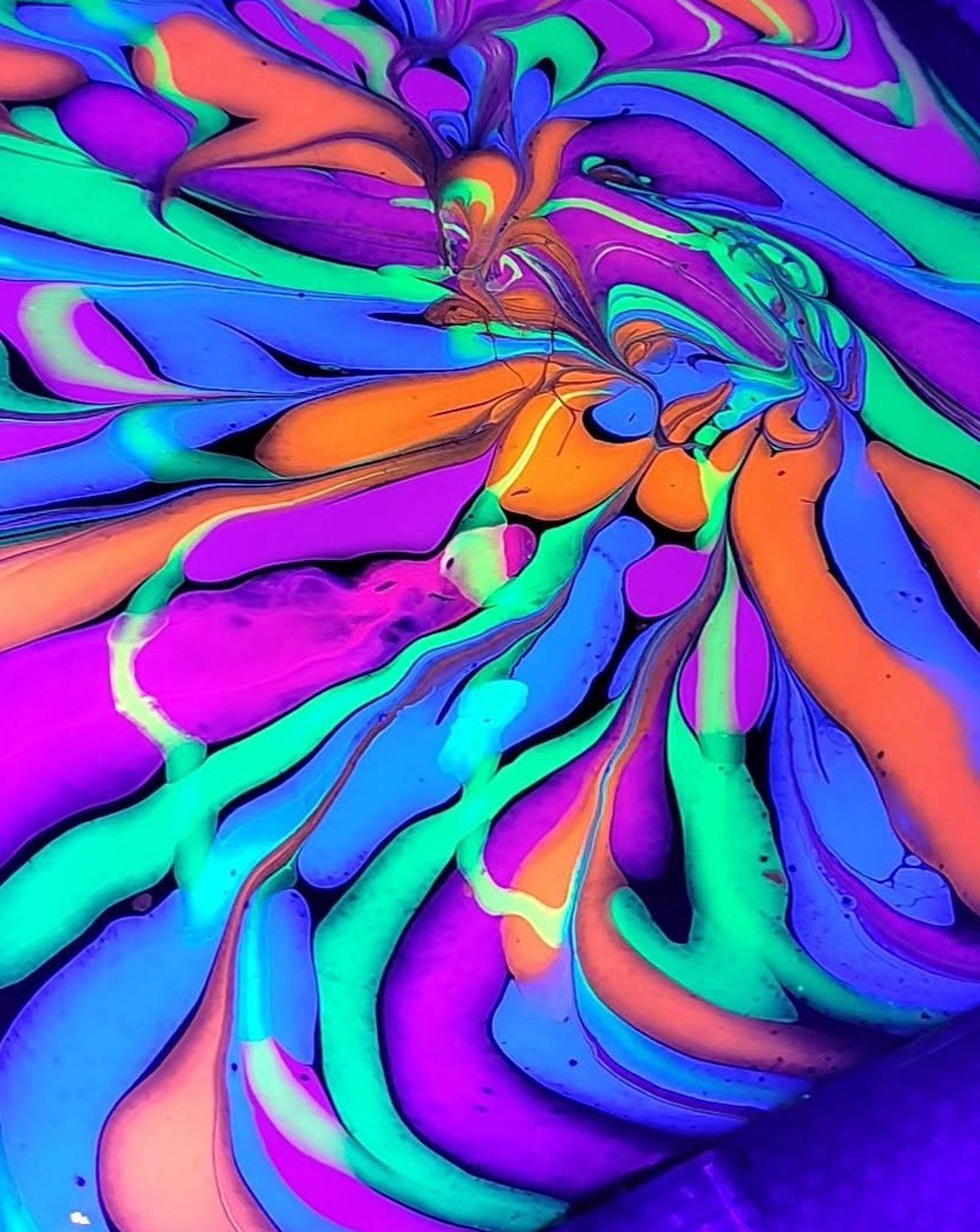
Fluid art under blacklight · Jessica Marcantel
Afterwards
What you walk out with
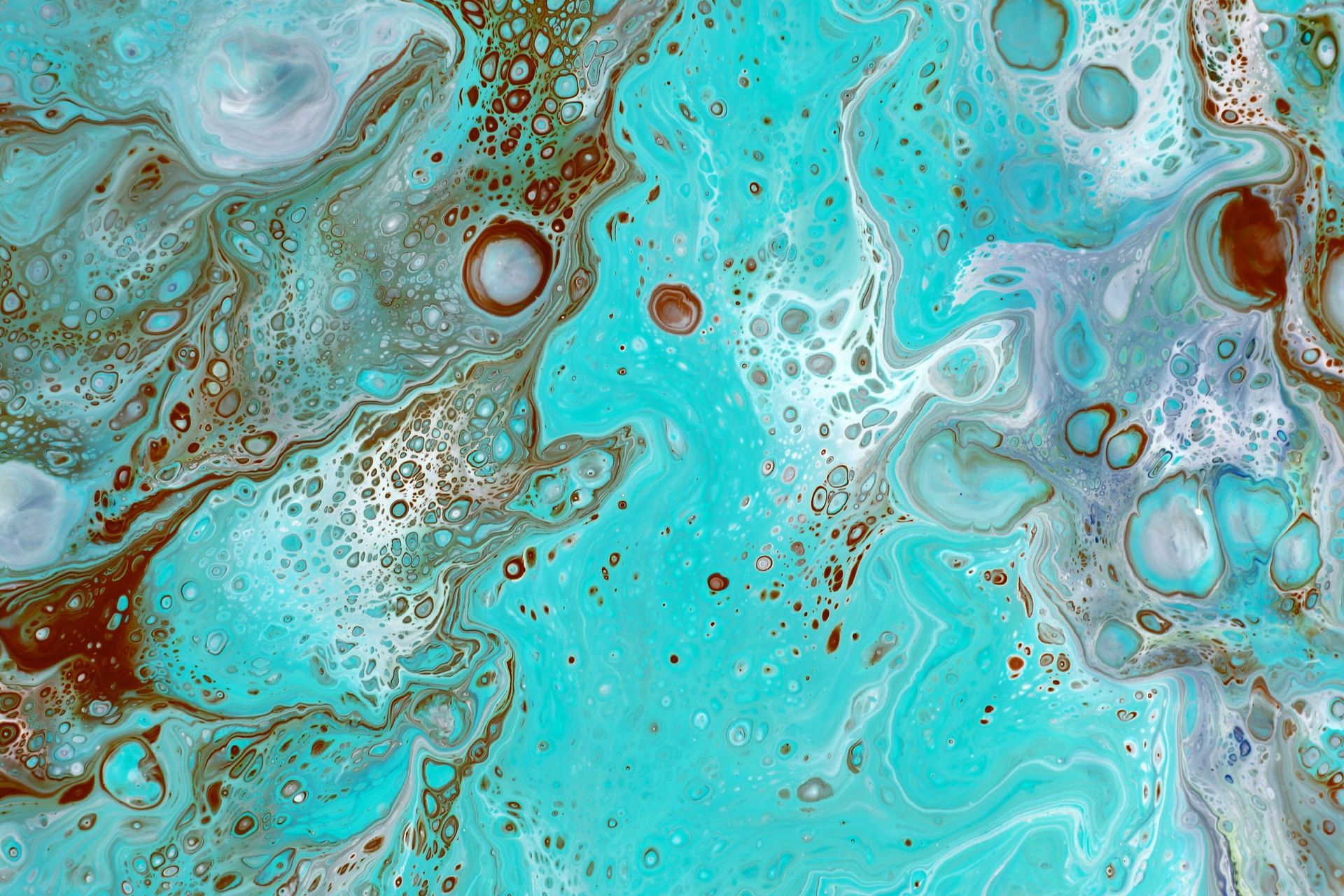
Something that was not there before, that you made. It might be beautiful. It might not be. Neither of those is the measure.
What people tend to describe afterwards is an emotional release they were not expecting, and a clearer sense of what they like, what they do not, and what they had been carrying around. That is the cathartic part, and it is the whole reason the work exists.
Before you book
Questions
Do I need to be good at art?
No. Beginner-friendly is not a marketing line here — most people who come have not made anything since school. Fluid art in particular does not require you to be able to draw.
What actually happens in a session?
Music goes on. You are given the materials and very little direction. You work. Nobody stands over your shoulder and nothing you make gets graded. What comes out is yours to keep.
What is the difference between a workshop and a program?
A workshop is a one-off group night, eight to twelve people, mostly fluid art. A program is one on one over four, six or twelve weeks, across more mediums and in far more depth. The workshop is a good way to find out whether the process is for you.
Where are you?
Gainesville and Jacksonville, Florida. Programs run in studio; the studio address is given to you when you book rather than posted here. Private events happen at your place.
Can I bring my kids to a workshop?
Yes. Workshops are built to be a genuinely good night out that a family can do together.
Do I need to bring anything?
No. All materials are included, and for private events we bring everything to you and take it away again.
How far ahead do I need to book a private event?
At least forty-five days. That is a hard minimum, not a preference — it is what it takes to source materials and hold the date.
Can we pick the music?
Yes. Private events can have a custom playlist built for them, or you can use one of ours.